
The chemical industry in Malaysia is a cornerstone of the nation’s economy, projected to reach an output of over 150,000 tons by the end of 2025. Whether you are in manufacturing, construction, or the palm oil sector, your choice of a chemical products supplier in Malaysia can determine your operational safety, product quality, and regulatory compliance.
With shifting regulations and a push toward digitalization in logistics, selecting the right partner is more complex than simply comparing price lists. This guide breaks down the essential criteria for 2026 to help you make an informed decision.
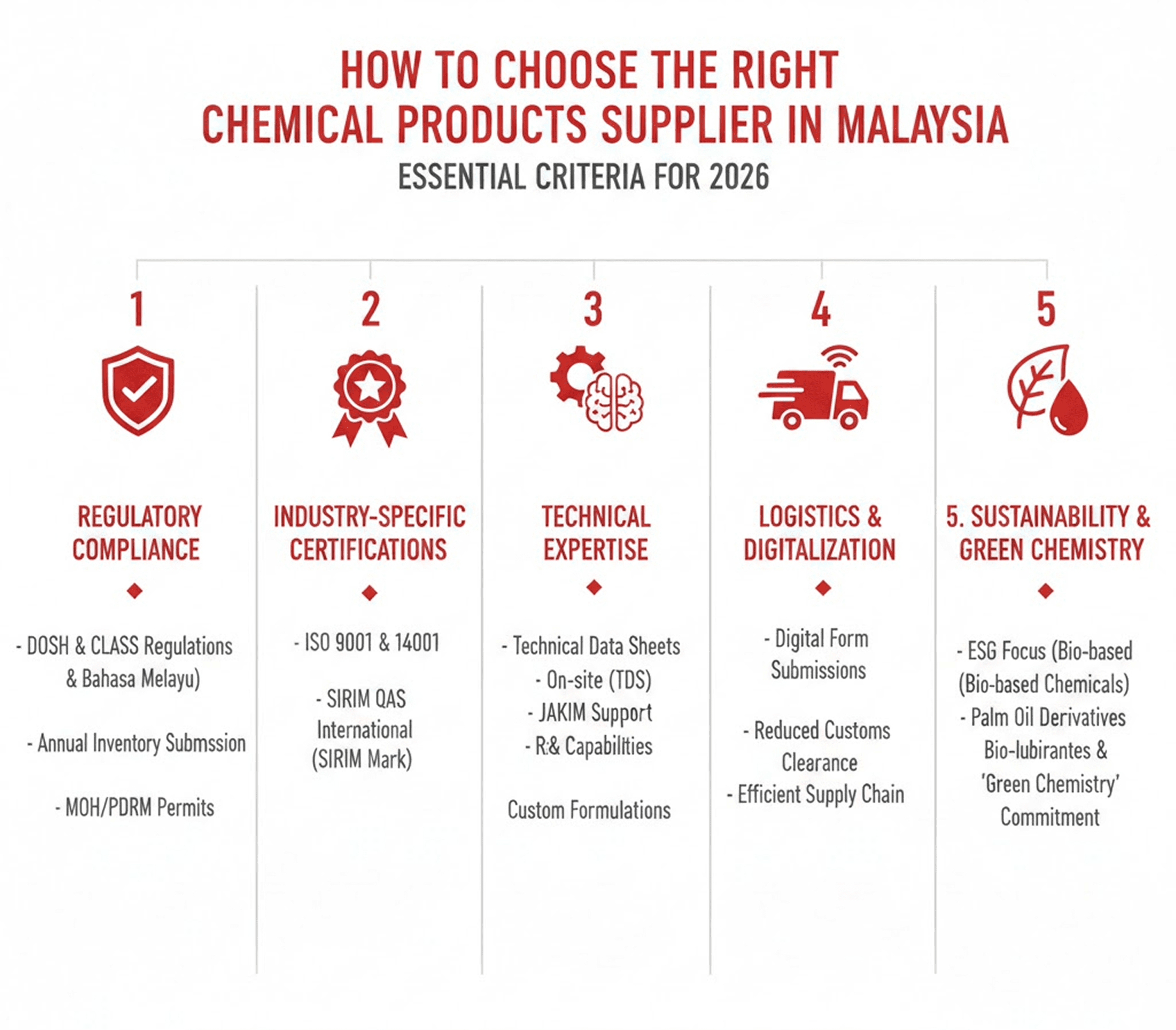
Verify Regulatory Compliance (DOSH & CLASS)
In Malaysia, the handling and supply of chemicals are strictly governed by the Department of Occupational Safety and Health (DOSH). A reputable supplier must strictly adhere to the CLASS Regulations 2013 (Classification, Labelling, and Safety Data Sheet).
- Safety Data Sheets (SDS): Ensure your supplier provides SDS in both English and Bahasa Melayu, as required by Malaysian law.
- Inventory Submission: Reliable primary suppliers must submit their chemical inventory to DOSH annually by March 31st.
- Permits: For specific hazardous chemicals, verify if they hold the necessary licenses from the Ministry of Health (MOH) or the Royal Malaysia Police (PDRM) for precursors.
Look for Industry-Specific Certifications
A high-quality chemical products supplier in Malaysia should hold certifications that prove their commitment to international and local standards:
- ISO 9001 & 14001: These ensure quality management and environmental
responsibility. - SIRIM QAS International: Look for the SIRIM mark, which is the gold standard for product testing and certification in Malaysia.
- JAKIM Halal Certification: If you are in the food, pharmaceutical, or cosmetic industry, Halal compliance is non-negotiable for local market access.
Evaluate Technical Expertise and Support
Chemicals aren’t just products; they are solutions that require technical “know-how.” Your supplier should act as a thought partner.
- Technical Data Sheets (TDS): Can they provide detailed technical specifications?
- On-site Support: Do they offer guidance on chemical blending or application?
- R&D Capabilities: Leading Malaysian distributors like Samchem or Luxchem often provide value-added services such as custom formulations.
Logistics and Digitalized Supply Chain
Logistics in Malaysia are evolving. As of May 2025, many Malaysian ports have adopted digital form submissions for hazardous chemical transport, reducing customs clearance times by up to 12%.
Questions to ask your supplier:
- Do you have specialized warehouses in industrial hubs like Pasir Gudang, Port Klang, or Bayan Lepas?
- Do your transporters comply with the Earthquake-Resistant Storage or specialized hazardous material transport standards?
- How do you manage “Last-Mile” delivery for time-sensitive chemicals?
Comparison of Supplier Types in Malaysia
| Feature | Primary Manufacturer (e.g., Petronas Chemicals) | Large Scale Distributor (e.g., Samchem, TMK) | Specialized Niche Supplier |
| Volume | High/Bulk only | Flexible (Bulk to Drum) | Small to Medium |
| Product Variety | Limited (Specific Range) | Very High (Multiple Brands) | Focused (e.g., Water Treatment) |
| Lead Time | Longer (Contract-based) | Short (Ex-stock available) | Variable |
| Best For | Massive industrial plants | SMEs and General Manufacturing | Specialized R&D or niche tech |
Sustainability and Green Chemistry
With the 2025 focus on ESG (Environmental, Social, and Governance), many Malaysian businesses are shifting toward bio-based chemicals. Given Malaysia’s abundance of palm oil, look for suppliers offering bio-lubricants or sustainable surfactants. Choosing a supplier committed to “Green Chemistry” can help your brand meet its sustainability targets.
Pro Tip: Always request a Certificate of Analysis (CoA) for every batch delivered. This document confirms that the specific batch meets the agreed-upon specifications, protecting you from production inconsistencies.
Frequently Asked Questions (FAQ)
How do I check if a chemical supplier is registered in Malaysia?
You can verify their business registration through SSM (Suruhanjaya Syarikat Malaysia). For manufacturing licenses, you can check with MIDA (Malaysian Investment Development Authority).
What is the most important document when buying hazardous chemicals?
The Safety Data Sheet (SDS) is the most critical document. It provides essential information on hazard identification, first-aid measures, and safe handling.
Can I import chemicals directly instead of using a local supplier?
Yes, but you will be responsible for DOSH CLASS compliance, customs duties, and specialized storage permits, which is why most businesses prefer a local chemical products supplier in Malaysia.